
Reduce Waste Volume (Output Level)
Effort Status
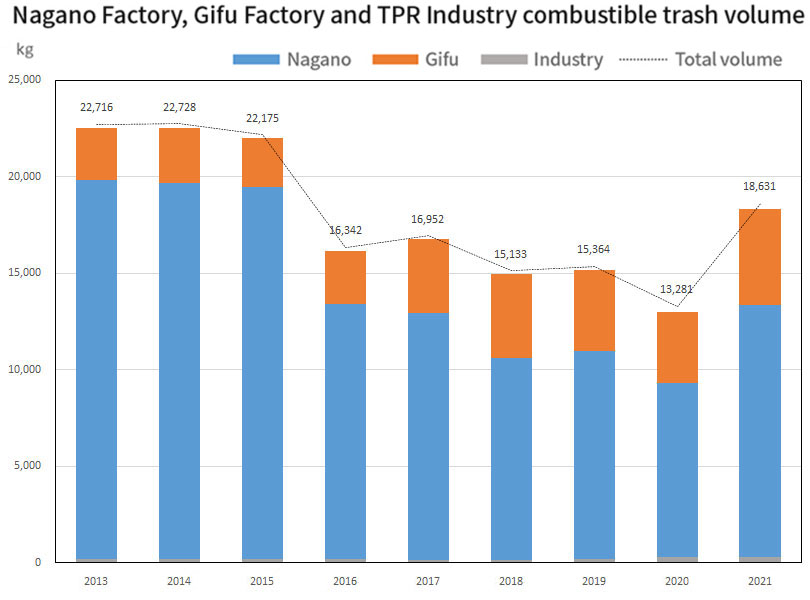
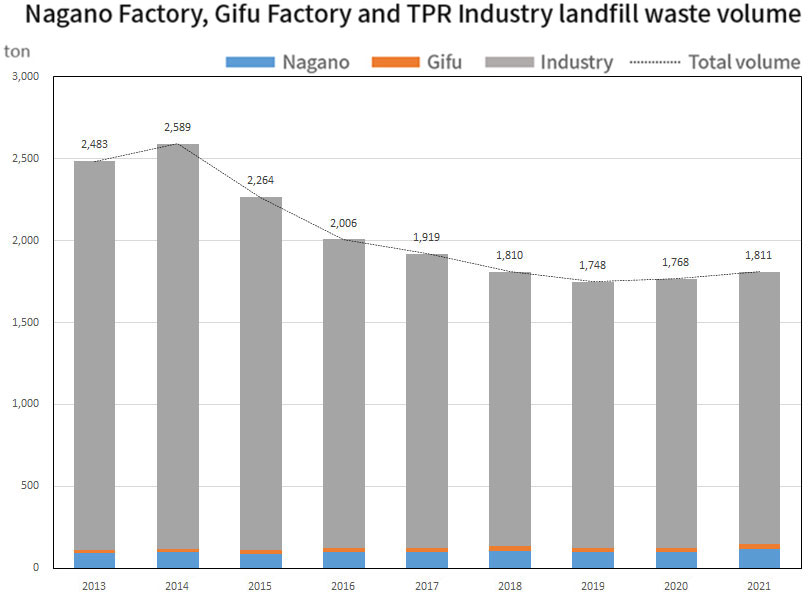
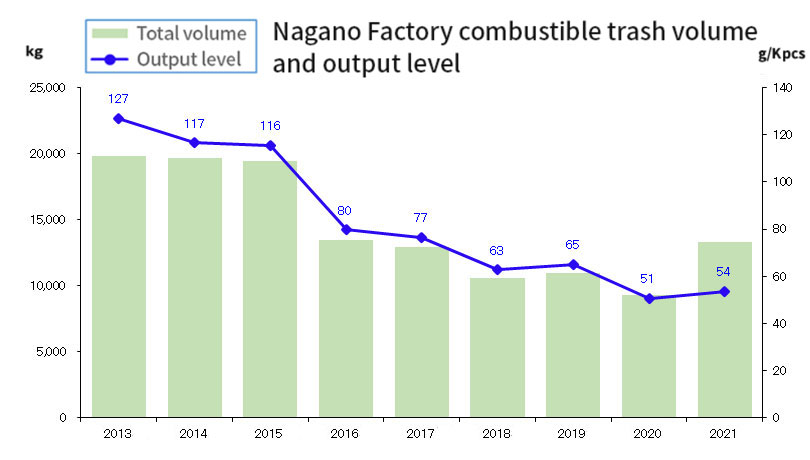
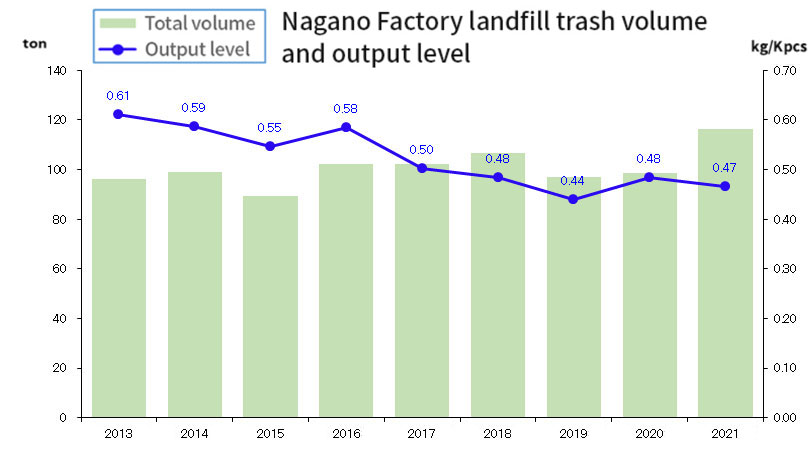
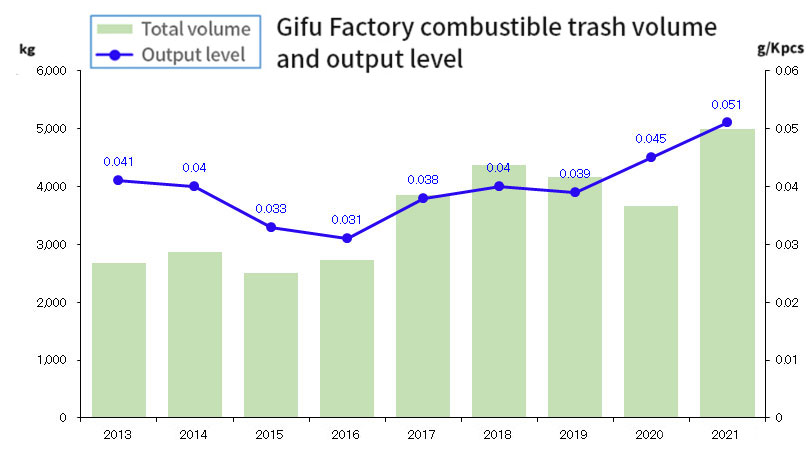
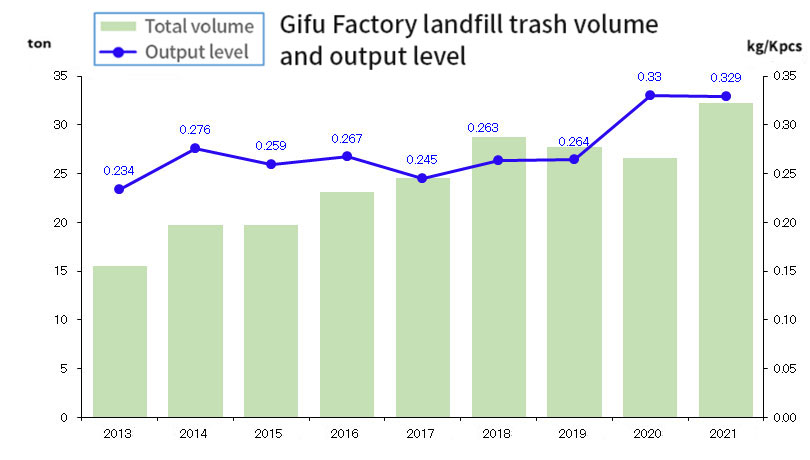
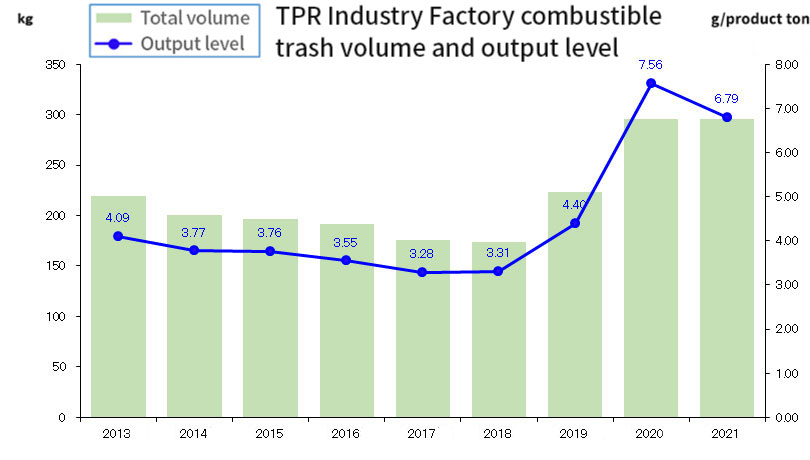
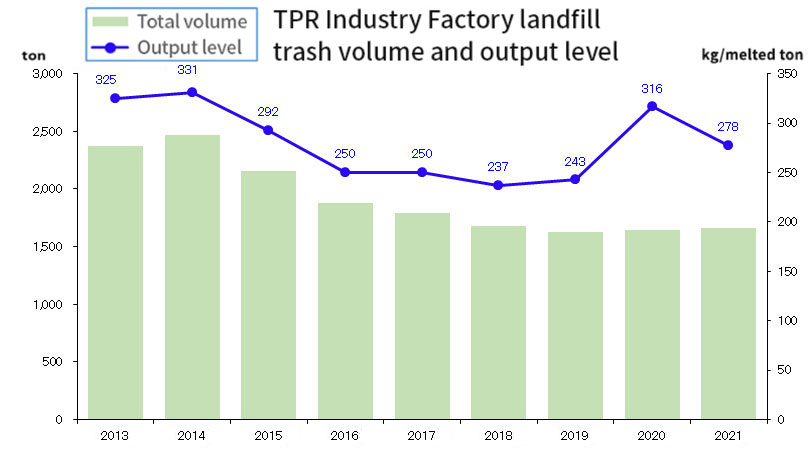
- As a medium-term initiative in our environmental policy, we are committed to reducing waste generation (both per-unit and total volume). Each plant is actively working toward the goal of reducing combustible and landfill waste by 30% by FY2030 compared with FY2013 levels.
- The results are shown in the graphs below. Total waste volume is significantly influenced by TPR Industry, which accounts for a large proportion of overall output. Regarding combustible waste, cardboard recycling at TPR Industry was temporarily suspended in 2019, but a new recycling partner was secured, resulting in overall improvement in FY2022. Meanwhile, the Nagano and Gifu Plants require further 3R (Reduce, Reuse, Recycle) improvement in response to increased production.
Specific examples
Example 1 Internal leveraging of waste acid/waste alkali
Waste acid/waste alkali from manufacturing processes are re-used as counteragents in our internal drain water treatment plant, reducing the volume of work undertaken by our outside partner.
Example 2 Paperless/paper usage reduction initiative
The whole company is engaged in promoting a shift to paperless via the introduction of an electronic notice circulation system, and reduction in usage of copy paper.
Example 3 Adherence to trash control
Trash segregation is displayed in various places internally. This clarifies waste for incineration by local authority, contractor waste and external recycling, which promotes recycling and reduction in trash to be incinerated.
Example 4 Melting/re-use of jigs and tools
As part of our re-use initiatives for jigs and tools, when they are no longer repairable/re-usable, they are not thrown away, they are melted and re-used as material.
Example 5 Waste Reduction through RPF*¹ Conversion of Oil-Stained Cardboard
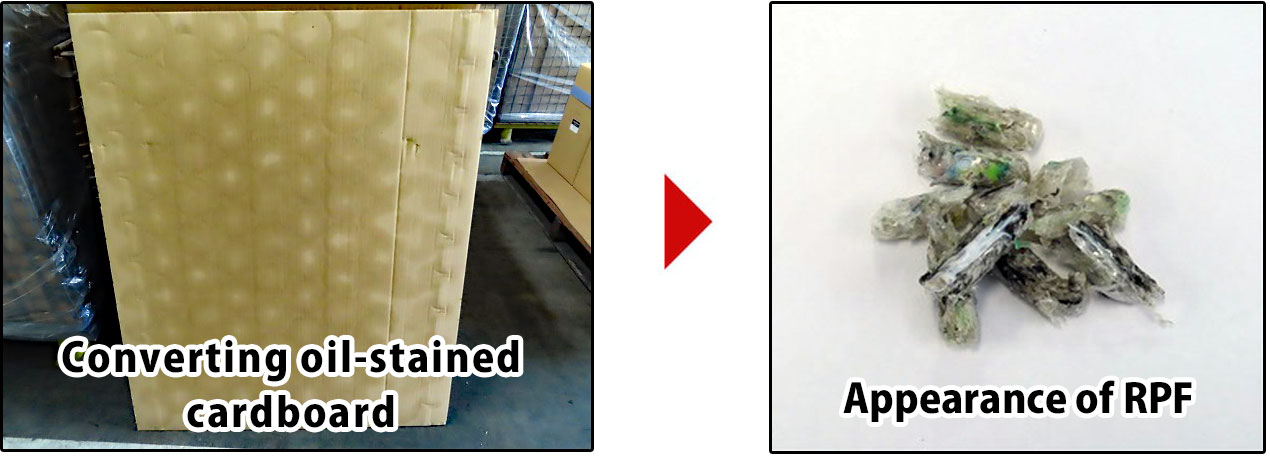
We reduce waste generation by converting oil-stained cardboard-previously disposed of as combustible waste-into RPF (Refuse Paper and Plastic Fuel).
*¹ RPF: High-grade solid fuel primarily made from wastepaper and plastics that are difficult to recycle as materials.